How to Clean and Maintain Your Mattress for Hygiene and Longevity
Regular vacuuming, prompt spot-cleaning, a protector and sensible rotation keep a mattress fresher and help it last. Always check the care label and warranty before using any cleaning method, since moisture or harsh products can void coverage.
By the Sleep Comfort Insights editorial team at Essential Systems · Last reviewed
Check the care label and warranty first
Many warranties exclude damage from stains, so a protector may be a condition of coverage. Read the care tag and the warranty terms before cleaning. Never remove covers marked non-removable, and do not soak foam, as trapped moisture can encourage mildew.
Supplies you will need
- Vacuum with an upholstery attachment.
- Mild dish soap or a gentle upholstery cleaner.
- Clean white cloths.
- Baking soda for deodorizing.
- Cold water; hot water can set protein stains such as blood.
- A fan or open window for drying.
Routine cleaning: every few months
- Strip the bed and wash sheets and the protector according to their labels.
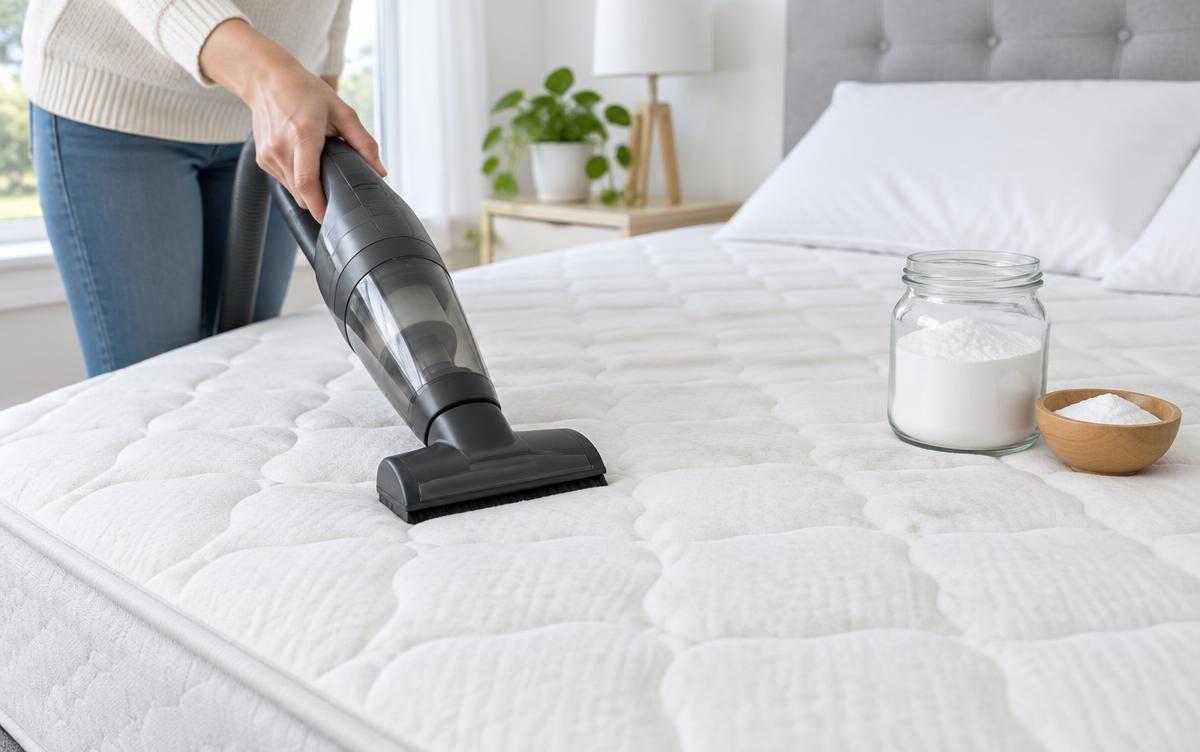
- Vacuum the top, sides and seams with the upholstery tool.
- Sprinkle a thin layer of baking soda, leave it for several hours, then vacuum it up.
- Let the mattress air out, ideally in a dry, well-ventilated room.
- Remake the bed only when the surface is fully dry.
Spot-cleaning stains
General approach
Act quickly. Blot, do not rub, to avoid pushing liquid deeper. Use a cloth lightly dampened with a mild soap solution, blot again with a plain damp cloth, and dry thoroughly with a fan.
Stain guide
| Stain | Suggested approach | Caution |
|---|---|---|
| Sweat or body oils | Mild soap solution, blot, dry fully | Do not oversaturate |
| Blood | Cold water, blot; mild soap if needed | Never use hot water |
| Urine | Blot, lightly dampen with mild cleaner, use baking soda to absorb odor | Act fast; check care label |
| Coffee or food | Blot, mild soap solution, then plain damp cloth | Avoid rubbing |
Ongoing maintenance
- Use a breathable, washable mattress protector.
- Rotate the mattress head to foot every few months if the maker permits; many one-sided foam and hybrid beds should be rotated, not flipped.
- Support it properly: slats should be close together, and large mattresses may need a center support leg.
- Keep bedroom humidity moderate to discourage dust mites and mildew.
- Avoid letting children or pets jump on it, which stresses coils and edges.
Cleaning by mattress type
- Memory foam: avoid saturation; foam holds moisture and dries slowly.
- Latex: keep away from direct sunlight and harsh chemicals that can degrade it.
- Innerspring and hybrid: vacuum seams, rotate as advised, and avoid damp cleaning of the core.
How often should I clean my mattress?
A light vacuum every few months and prompt spot-cleaning is a reasonable routine, with more frequent care if you have allergies, pets or children.
Should I flip my mattress?
Only if it is designed to be two-sided. Most modern mattresses are one-sided and should be rotated instead.
Can I use steam cleaners?
Usually not recommended, because moisture can penetrate foam and may void warranties. Check the care label.
How do I remove odors?
Baking soda and airing out the mattress often help. Persistent smell or mildew may mean it is time to replace it.