Choosing the Right Mattress: Your Comprehensive Buying Guide
The right mattress fits your body, room, budget, and return options—not just a marketing description. This mattress buying guide takes you from identifying what is wrong with your current bed to checking the paperwork before purchase. Compare a small shortlist under consistent conditions instead of chasing a universally perfect bed.
By the Sleep Comfort Insights editorial team at Essential Systems · Last reviewed
Begin with a problem statement
Write down why you are shopping. Is the bed visibly sagging, too warm, difficult to turn on, or uncomfortable at the shoulder? Are two sleepers disturbing each other? A clear problem statement helps distinguish useful features from extras that will not address your needs. If your main concern is new or persistent pain, get medical advice rather than assuming replacement is the only answer.
Inspect your existing setup before spending. A loose frame, missing center support, or incompatible foundation can make a good mattress feel unstable. Check the maker’s base requirements and any visible wear. Our replacement guide helps separate deterioration from a mismatch in comfort. Age is a clue, not a universal expiration date.
Set a complete budget
Decide on a maximum total before browsing discounts. Include the mattress, tax, delivery, setup, old-bed removal, and any required foundation. A protector, deeper fitted sheets, or a different pillow may add costs too. Compare the final checkout amount rather than a percentage-off badge. An advertised sale does not establish either quality or value.
If money is tight, prioritize a suitable construction and workable return terms over decorative covers or elaborate cooling language. More expensive does not guarantee better pain relief. Financing can make the monthly cost look small while extending the obligation; review interest, deferred-interest rules, fees, and what happens if you return the bed before the balance is paid.
Measure the room, frame, and delivery route
Use our mattress size guide to compare standard dimensions, then measure your actual space in inches. Leave room for doors, drawers, and walking around the bed. Check the usable internal dimensions of an existing frame and the height of the finished sleeping surface. Sitting down and standing up should feel manageable for the people using it.
- Measure stair turns, door openings, elevators, and low ceilings along the delivery route.
- Ask whether delivery means curbside, doorstep, or placement inside the bedroom.
- Check mattress and base weight limits, including combined sleeper weight.
- Confirm whether a split setup requires separate sheets, bases, or delivery arrangements.
Choose the feel before choosing the label
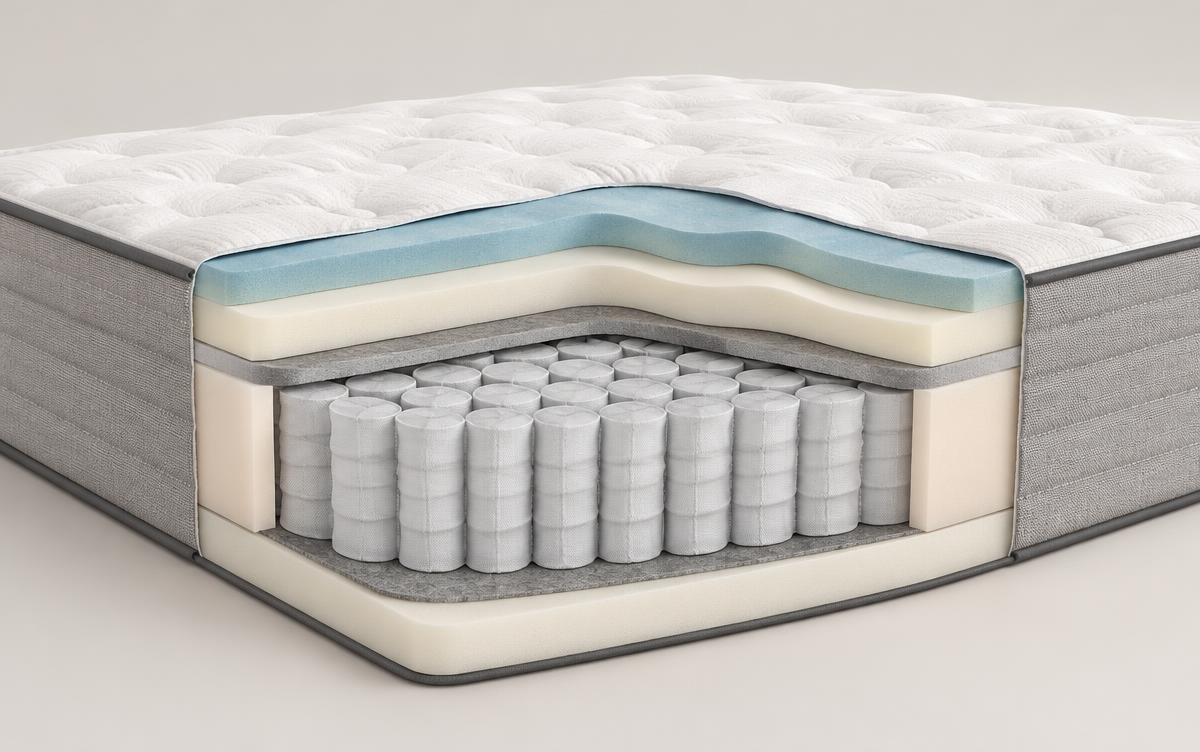
Read understanding mattress types to compare foam, latex, innerspring, and hybrid construction. Then decide whether you prefer a close contour or a buoyant surface. Consider ease of turning, motion transfer, and edge stability. The same material category can contain very different beds, so it should narrow a shortlist rather than make the final decision.
The firmness scale is not standardized across brands. A medium-firm description is a useful starting point, not a guarantee of an identical feel. Body weight distribution changes how deeply you engage the layers. Side sleepers often need more cushioning at the hips and shoulders, while stomach sleepers may prefer less midsection sinking. Test rather than treating these tendencies as rules.
Build a small comparison sheet
| Question | What to record | Why it matters |
|---|---|---|
| Construction | Comfort materials, thicknesses, support core | Shows what creates the feel |
| Fit | Pressure, turning, edge stability | Links features to actual use |
| Temperature | Cover, contour depth, bedding compatibility | Helps evaluate heat complaints |
| Trial | Start date, minimum use, return costs | Defines your financial risk |
| Warranty | Defect threshold, exclusions, remedy | Clarifies protection after the trial |
Ask for missing specifications in writing. Foam density can inform durability comparisons within similar foam types, but it does not equal firmness. Coil count and mattress height also cannot establish quality by themselves. If a seller will not explain a claim such as orthopedic support, treat it as marketing rather than medical evidence. The terminology glossary can help translate unfamiliar labels.
Test for realistic comfort
In a showroom, lie down in your usual positions rather than briefly pressing the corner. Use a suitable pillow and allow enough time to notice pressure or difficulty moving. If possible, bring your sleeping partner. Test getting in and out and sitting near the edge, especially if mobility matters. Showroom comfort helps screening, but it cannot predict an entire night at home.
For online purchases, a home trial becomes especially important. Keep notes on morning comfort, awakenings, heat, and movement after delivery. Keep your base and bedding consistent while evaluating the mattress, and record the return deadline immediately. Take photographs of delivery damage and keep receipts. Never discard required packaging until you know whether the seller needs it for a return.
Read the trial and warranty separately
A trial usually addresses preference; a warranty usually addresses qualifying defects. They are not interchangeable. Read our warranty and return policy guide before ordering. Find out whether refunds exclude delivery, whether exchanges end your return rights, and whether pickup is available where you live. Ask how a financed purchase is refunded and when the credit should appear.
Warranty language may specify foundation requirements, stain exclusions, indentation measurements, and prorated costs. A long warranty is not a promise of unchanged comfort for its entire term. Save the terms in effect on your purchase date. If donation is part of a return, ask what happens when local organizations cannot accept a used mattress; do not assume a receipt will be easy to obtain.
Frequently asked questions
Is online or in-store shopping better?
Either can work. Stores allow a preliminary feel test; online shopping may offer broader comparisons. In both cases, the written trial, delivery details, and full price matter more than the sales channel.
Should I buy the matching base?
Only if it fits your needs. A different base may work if it meets the mattress manufacturer’s support requirements. Verify compatibility in writing before buying.
Does a cooling cover solve overheating?
Not necessarily. Bedding, room conditions, contour depth, and personal factors all matter. A cool first touch is not proof of all-night temperature control.
What if my partner likes a different firmness?
Try beds together and consider compromises in cushioning, motion isolation, and edge support. Split configurations may help, but check the seam, base compatibility, and separate return terms.
Ready for the next step?
Compare mattress types