When to Replace Your Mattress: Recognizing the Signs and Impact on Your Health
When to replace a mattress depends more on its condition and your sleep than on a birthday alone. Persistent sagging, broken support, or discomfort that follows you night after night are reasons to investigate. Check the foundation and pillow before deciding the mattress is the cause.
By the Sleep Comfort Insights editorial team at Essential Systems · Last reviewed
Use condition rather than a rigid replacement deadline
There is no universal expiration date that tells every sleeper when a mattress stops being useful. Materials, construction, body load, moisture, foundation quality, and how often the bed is used all influence wear. Age is a reason to inspect more carefully, not proof that a bed is unsafe or that it must be replaced immediately. A lightly used guest bed may remain serviceable longer than an everyday mattress of the same age, provided it has been kept dry and properly supported.
Likewise, an expensive mattress can fail to suit you well before its materials wear out. Separate loss of comfort from structural damage and from changed needs. Weight changes, pregnancy, an injury, or a new sleeping partner can alter what feels comfortable. A mattress that once worked may no longer be the right fit even if it has no visible defect. The buying guide helps translate those changed needs into practical shopping priorities.
Look for changes in shape and support
Inspect the mattress with bedding removed and nobody lying on it. Look for a persistent hollow, raised ridge, damaged edge, or uneven area. Then inspect the frame and foundation for cracked slats, loose fasteners, missing center legs, and uneven floor contact. A support problem beneath the mattress can mimic internal sagging. Follow the manufacturer's inspection and measurement instructions if you intend to submit a warranty claim; different warranties define qualifying indentations differently.
| Sign | Check first | When replacement may make sense |
|---|---|---|
| Visible body impression | Warranty rules and foundation condition | Permanent depression or failed support remains |
| New creaking or instability | Frame joints, slats, and hardware | Internal damage persists after base problems are fixed |
| Pressure and frequent repositioning | Pillow, firmness fit, recent health changes | Comfort remains poor on a sound foundation |
| Musty odor or moisture damage | Leak source and signs of mold | Contamination cannot be safely resolved |
| Rolling toward the center | Floor level and center support | The mattress itself has a lasting slope |
Notice patterns in your sleep, not one bad night
Repeated waking, pressure at the hips or shoulders, and difficulty finding a comfortable position can justify reassessing the bed. Keep a short record of morning symptoms, sleep interruptions, and recent activity. Sleeping better elsewhere can be a useful clue, but travel also changes schedules, stress, bedding, and temperature. It is not a controlled test. Our explanation of whether a bad mattress can cause back pain discusses this distinction without treating pain as proof of mattress failure.
A mattress is not the only possible contributor to morning aches. An overly high pillow, a new exercise routine, poor sleep, and existing conditions can all affect how you feel. If symptoms persist, worsen, spread down a limb, or follow an injury, seek medical assessment rather than repeatedly changing bedding. Replacing a bed may improve comfort, but sellers cannot responsibly guarantee that it will cure a particular diagnosis or eliminate every ache.
Hygiene concerns need a targeted response
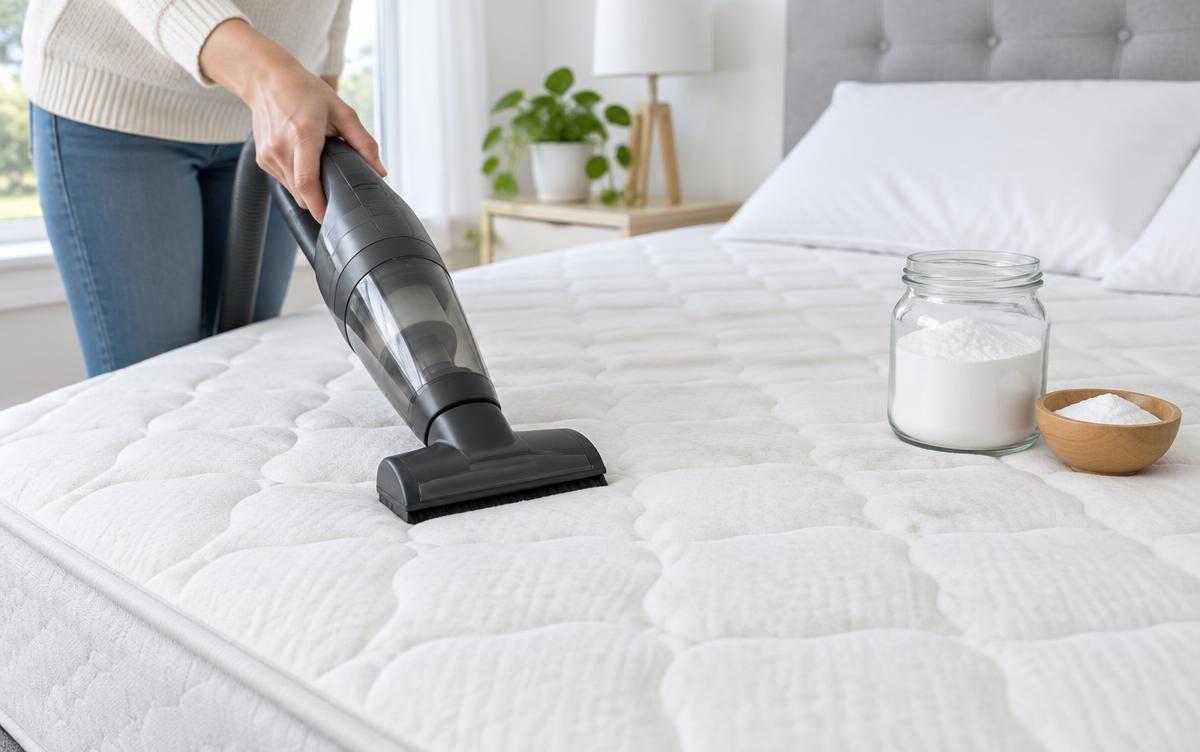
Dust, shed skin, and allergens can accumulate in bedding and upholstery, but an older mattress does not automatically cause allergies. First review washable bedding, protector care, bedroom dust control, and humidity. Follow the care label: soaking a mattress or using excessive heat can damage materials and trap moisture. Our cleaning and maintenance guide explains routine care. A washable protector can simplify cleanup, but it does not make a damaged or contaminated mattress permanently usable.
Visible mold, repeated water exposure, or substantial contamination requires a more cautious decision than ordinary surface dust. Fix the source of moisture and consider professional advice about disposal and cleanup. Bed bugs also require a coordinated pest-management plan; carrying an infested mattress through the home or replacing it without treatment may spread the problem. Do not donate a mattress with an infestation or unresolved contamination. Local waste services can explain accepted handling and wrapping procedures.
What rotation and toppers can realistically do
If permitted by the manufacturer, rotating head-to-foot can distribute wear more evenly. Do not flip a one-sided mattress unless its instructions say it is designed for that. Rotation cannot repair a broken coil, crumbling foam, or a permanent support depression. A topper may add cushioning to a sound surface that feels too firm, but it tends to follow the shape beneath it. It is not a reliable fix for a hammock-like sleeping area or a collapsing edge.
- Tighten and repair the bed frame only as instructed, replacing damaged components rather than improvising unsafe supports.
- Confirm slat spacing and center support meet the mattress requirements before investing in a new sleep surface.
- Use an appropriate protector and keep the mattress dry, especially in rooms with poor airflow or moisture problems.
- Move a heavy mattress with help and follow handling instructions; bending or dragging it can damage internal components.
- Recheck comfort after a pillow adjustment, but do not keep buying accessories to compensate for clear structural failure.
Plan replacement without wasting a usable bed
If the mattress remains hygienic and structurally sound but no longer suits you, check whether local organizations accept used mattresses; many do not. Be honest about condition and never pass along a bed with known pests or significant damage. Recycling programs and municipal bulky-item services vary by location. Confirm collection rules before delivery day, especially if the retailer charges separately for removal or cannot remove certain contaminated items.
Before shopping, photograph defects and review your existing warranty. Comfort changes, staining, normal softening, and unsupported foundations may be excluded, so a long warranty does not guarantee a free replacement. Compare those terms with the comfort trial on any new bed using the returns guide. Set a budget that includes the foundation, delivery, and disposal if needed. Replacing the mattress should solve an identified problem rather than simply respond to a promotional countdown.
Frequently asked questions
Should every mattress be replaced after the same number of years?
No. Lifespan varies with construction, use, care, and support. Inspect condition and evaluate comfort rather than relying on one universal age limit.
Does a sagging mattress always qualify for a warranty claim?
No. Each warranty defines qualifying defects and measurement procedures. Foundation problems, staining, and normal softening may affect coverage.
Can I keep a mattress if it still feels comfortable?
Often, if it remains structurally sound, dry, and hygienic. Continue inspecting the mattress and support system, particularly if the bed is older or your needs change.
Will replacing my mattress cure allergies?
Not necessarily. Allergens may come from bedding, pets, dust, or other indoor sources. Persistent symptoms need appropriate evaluation and targeted environmental changes.
Ready for the next step?
Explore the mattress buying guide