Memory Foam Mattresses: Detailed Pros, Cons, and Who Benefits Most
Memory foam mattresses cushion the body with a slow-responding surface that can relieve pressure and reduce transferred movement. The trade-offs can include warmth and a less buoyant feel. Whether one suits you depends on its layers, your sleeping position, and how easily you want to move.
By the Sleep Comfort Insights editorial team at Essential Systems · Last reviewed
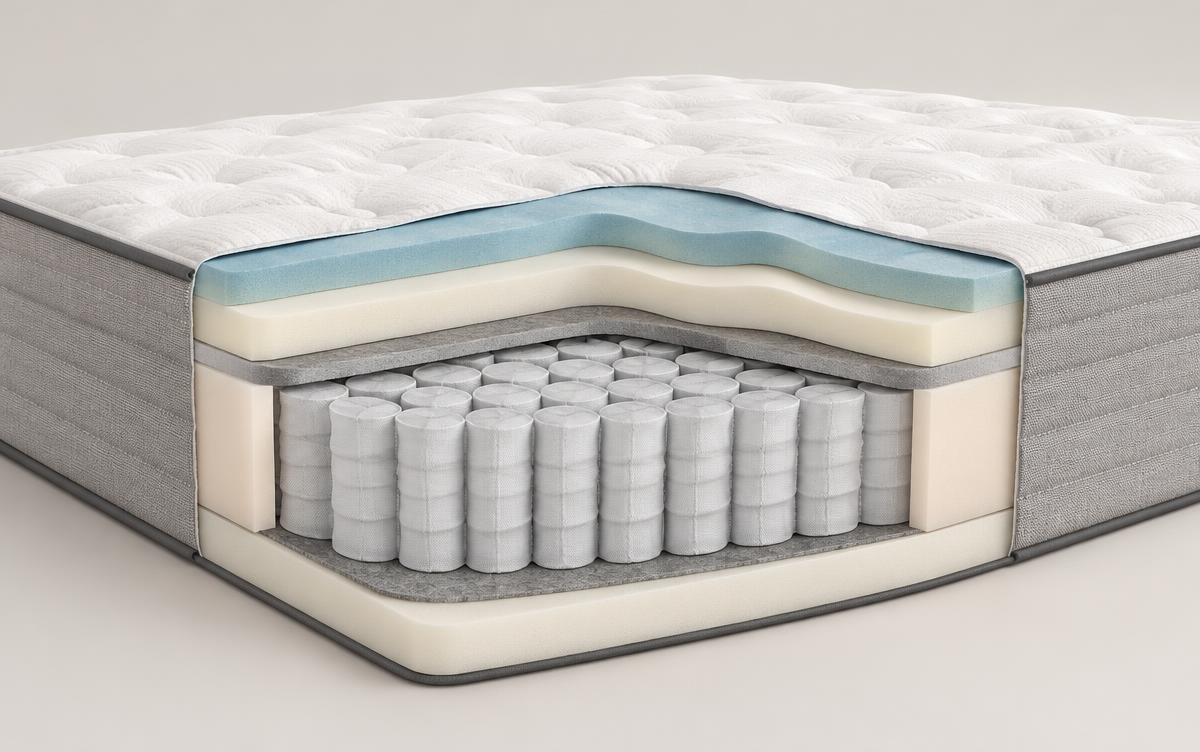
What makes a mattress memory foam?
Memory foam is viscoelastic polyurethane foam: it changes shape under pressure and typically recovers more slowly than conventional upholstery foam. In an all-foam mattress, memory foam usually forms part of the comfort system above a firmer polyurethane support core. A mattress with memory foam above coils is generally a hybrid instead. The label describes one material, not the entire support system or a guaranteed level of quality.
Heat and time under load can change how memory foam feels. A surface that seems firm when you first lie down may relax around you after several minutes. Formulations vary, so not every memory foam mattress feels like deep, slow-moving foam. Start with understanding mattress types if you are comparing several constructions rather than a specific model.
Memory foam mattress pros and cons
| Feature | Potential advantage | Trade-off to check |
|---|---|---|
| Contouring | Spreads load around shoulders and hips | Deep sink can make turning harder |
| Motion isolation | Can soften a partner’s movements | Shared foundations may still transmit movement |
| Surface feel | Often quiet with little bounce | Less springy for moving or getting up |
| Temperature | Some designs use breathable covers and foams | Body-hugging layers can retain warmth |
| Edges | Foam can feel comfortable while lying down | Sitting near the perimeter may compress it |
Pressure relief is different from support
Contouring can reduce concentrated pressure, particularly for side sleepers whose shoulders and hips press into a smaller area. But a comfortable first impression does not prove that a mattress supports your body through the night. If your pelvis sinks much farther than your torso, the overall position may feel strained even when the surface is pleasantly cushioned. Conversely, a firm foam surface can leave a side sleeper with pressure at the shoulder.
For back pain, evaluate whether the mattress allows a relaxed, sustainable position without a persistent hammock sensation. Neither foam nor another material can diagnose or cure the cause of pain. Review spinal alignment and sleep and the firmness scale to separate surface softness from deeper resistance.
Who is most likely to enjoy the feel?
Side sleepers and couples
Side sleepers who like a gentle cradle may appreciate memory foam, provided the comfort layer accommodates the shoulder without leaving the waist unsupported. Couples may value reduced motion transfer, especially when one person changes position frequently. Check your own sleep positions and the usable width near the edge; motion isolation does not compensate for feeling crowded or rolling toward the middle.
Back, stomach, and combination sleepers
Back sleepers often need moderate contouring rather than the deepest possible hug. Stomach sleepers may need a shallower, firmer comfort system so the abdomen does not settle excessively. Combination sleepers should practice turning from side to back and getting out of bed. If the foam feels restrictive during a short test, a more responsive construction may be easier to live with. Our memory foam versus latex comparison explains that difference.
Heat, odor, and cooling claims
Close contouring can reduce airflow around the body. Perforations, more open foam structures, and breathable covers may help, but gel or cooling language alone does not establish all-night temperature performance. Bedding, a waterproof protector, room conditions, and your own heat sensitivity can matter as much as a specialty layer. Compare the actual construction using the hot-sleeper buying guide.
New foam can release an initial odor after unpacking. Follow ventilation and expansion instructions, and avoid sleeping on a surface that causes irritation. A low-emissions certification addresses a defined testing standard; it does not mean no chemicals, no odor, or suitability for every sensitive person. Ask what component was certified rather than assuming the claim covers the complete bed.
Read the specifications before buying
- Ask for the thickness and material of every comfort and support layer, not just total mattress height.
- Compare foam density within similar foam types. Density is not the same as firmness and cannot predict lifespan by itself.
- Confirm the foundation, slat spacing, center support, and any weight limits required by the manufacturer.
- Read the trial, return fees, pickup arrangements, and warranty indentation rules before checkout.
A thicker mattress is not automatically more supportive, and more memory foam is not always better. A deep comfort stack can change how far you sink before reaching the support core. If a seller does not publish meaningful specifications, consider that uncertainty alongside the return policy. The memory foam mattress profiles guide can help organize comparisons without treating a marketing label as a test result.
Test and maintain the mattress
Use your normal pillow and spend time in each usual position, including near the edge. At home, record pressure, ease of turning, morning comfort, and heat rather than judging only the first night. Follow the care label: most layered foam mattresses are not designed to be flipped. Rotate only as directed, keep foam dry, and use a compatible protector. A topper can change the surface feel but will not rebuild a sagging support core.
Frequently asked questions
Is memory foam always soft?
No. Memory foam mattresses span a broad firmness range. Foam formulation, layer thickness, the support core, and your body weight all affect the finished feel.
Can memory foam help back pain?
It may improve comfort when cushioning and support fit the sleeper, but it is not a treatment. Worsening or persistent pain warrants clinical advice rather than repeated mattress experiments.
Does higher foam density mean a firmer bed?
No. Density describes mass per volume, while firmness describes resistance to compression under specified conditions. Compare both, along with the full layer design.
Can I use memory foam on an adjustable base?
Many designs are compatible, but check written approval for the exact mattress and base. Foundation requirements and warranty terms still apply.
Ready for the next step?
Explore the mattress buying guide