Mattress Firmness Scale Explained: Discover Your Ideal Comfort and Support
The mattress firmness scale describes perceived feel, usually from 1 for extremely soft to 10 for extremely firm. It is useful shorthand, not a standardized measurement or a medical rating. Your body and sleep position influence how any numbered mattress actually feels.
By the Sleep Comfort Insights editorial team at Essential Systems · Last reviewed
What the 1–10 scale means
Firmness describes the resistance and cushioning you notice when lying down. A lower number usually means easier surface compression and deeper sink, while a higher number usually means less give. Most everyday shopping comparisons concern the middle of the scale. The extreme ends are less commonly useful starting points, and a mattress may feel different after its layers warm and settle around you.
Manufacturers do not all use the same testing method, sleeper panel, or reference surface. A 6 from one company may feel closer to a 7 or a 5 elsewhere. Use numbers to compare nearby options within a product line, then examine the layer design and trial policy. The mattress buying guide puts firmness alongside size, temperature, foundation, and return terms.
Mattress firmness scale chart
| Rating | Common description | What you may notice |
|---|---|---|
| 1–2 | Extremely soft to very soft | Deep compression with little surface resistance |
| 3–4 | Soft to medium-soft | Noticeable cushioning and contouring |
| 5–6 | Medium to medium-firm | A balance of give and resistance |
| 7–8 | Firm | Shallower sink and stronger pushback |
| 9–10 | Very firm to extremely firm | Minimal cushioning at the surface |
Firmness is not the same as support
Support is the way the entire mattress manages your load and helps maintain a comfortable position. A soft comfort layer can sit above a strong support core, and a firm surface can sit above weak or deteriorated materials. Simply increasing the firmness number does not fix every support problem. Look for proportional sink rather than either maximum softness or minimum movement.
Pressure relief is another related but distinct quality. It concerns how contact load is distributed at places such as the shoulder and hip. Too little cushioning can create pressure even on a highly supportive core. Too much deep softness can feel pleasant initially yet make turning difficult. The useful target is a balance that remains comfortable in your usual positions, not a single number in isolation.
Starting ranges by sleeping position
| Usual position | Initial test range | Check during a trial |
|---|---|---|
| Side | About 4–6 | Shoulder and hip cushioning with comfortable waist support |
| Back | About 5–7 | Moderate pelvic sink without a hammock sensation |
| Stomach | About 6–8 | Limited midsection sink without painful pressure |
| Combination | About 5–7 | Comfort in the main position and easy turning |
These ranges overlap deliberately. A side sleeper with a particular build may prefer a firmer bed, and a stomach sleeper may dislike an extra-firm surface. Choose the position you spend most of the night in, not just the one you start in. If you divide time equally, compare how each position feels rather than averaging away a clear pressure problem.
Why body weight changes the feel
People under 130 lb often compress the upper layers less, which can make a nominally medium surface feel firm. Those from 130–230 lb may experience a different depth of contouring, and those over 230 lb may engage more of the transition and support layers. Those bands help organize shopping, but they are not biological cutoffs. Two people at the same weight can have different proportions and pressure needs.
A lighter sleeper may start a little softer within a suitable position range, while a heavier sleeper may compare a firmer or more robustly supported option. More weight does not remove the need for cushioning, especially on the side. Read the guide for heavier individuals for construction and load considerations that a firmness label cannot capture.
Materials change the character of firmness
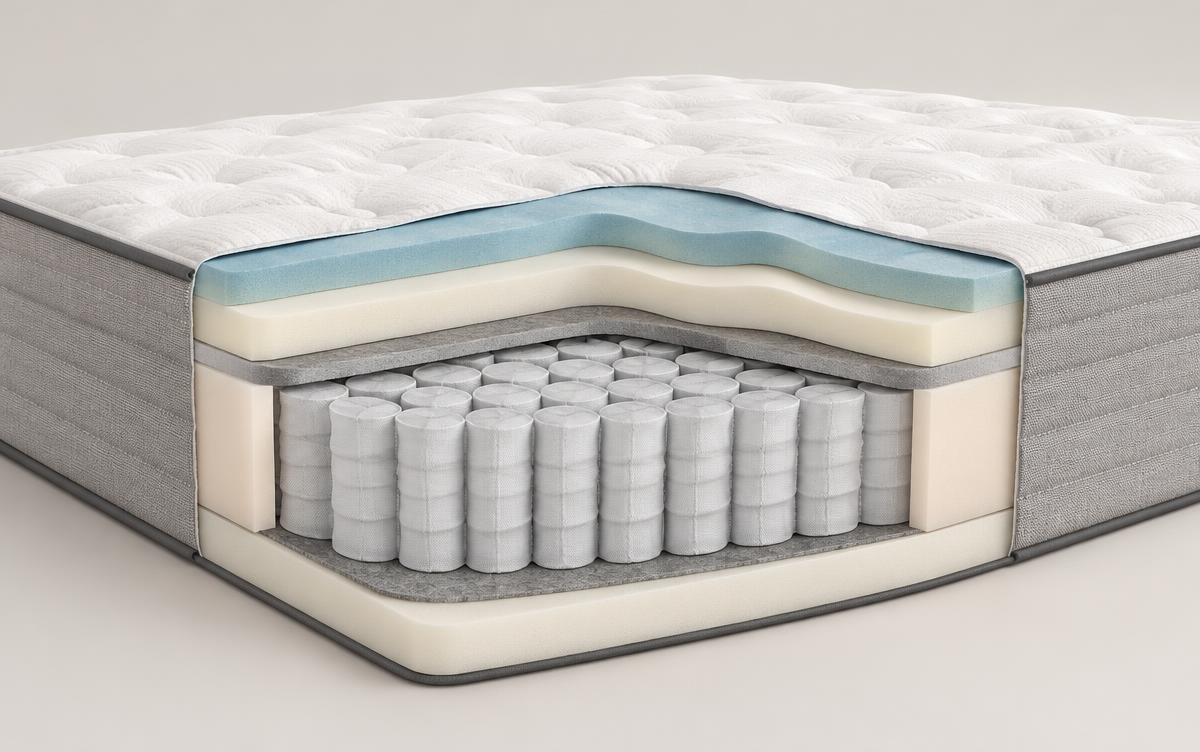
A medium-firm memory foam mattress may cradle slowly, while a medium-firm latex mattress may feel buoyant and springy. A hybrid adds the response of coils under its comfort system. Quilting and pillow-tops can soften the first impression without changing the deeper support much. Compare memory foam and latex if two mattresses share a number but feel surprisingly different.
Zoning can also make one area feel firmer than another. Whether that helps depends on where your body lands and how you sleep. A single overall number hides those local differences, along with edge stability and the effort needed to roll over. If mobility matters, practice sitting, standing, and turning rather than relying on a firmness description as a proxy for ease of use.
Back pain and the scale
Medium-firm is a reasonable starting point for many people with nonspecific back discomfort, but no numbered rating treats all back pain. A frequently cited 2003 Lancet trial by Kovacs and colleagues favored medium-firm over firm mattresses in its chronic nonspecific low-back-pain population. Its findings do not make a retail 6 universally therapeutic. Read firm versus soft for back pain for context.
Use the quiz, then verify the result
The mattress firmness selector quiz organizes sleep position, body weight, back-pain concerns, and feel preference into a starting recommendation. It cannot account fully for your proportions, pillow, mobility, mattress wear, or the differences between manufacturers. Compare the result against neighboring firmness options and use it to ask better questions rather than treating it as a final answer.
- Test with your normal pillow in every usual sleep position.
- Wait several minutes for the surface to settle, especially with memory foam.
- Record pressure, morning comfort, ease of turning, and heat during a home trial.
- Check foundation compatibility and all return costs before ordering.
If the mattress feels wrong, identify the specific issue before changing the number. Shoulder pressure may call for different cushioning; deep pelvic sink may call for a shallower comfort stack or stronger support. A permanent dip calls for a structural check. A topper can alter surface feel on a sound bed, but it cannot restore worn support materials.
Frequently asked questions
Is a 6 the same from every company?
No. Firmness scales are not standardized across brands, and different materials can feel very different at the same nominal rating.
Does a heavier person always need an 8?
No. Position, body proportions, layer resilience, and deeper support matter. A heavier side sleeper may still need substantial shoulder and hip cushioning.
Is a soft mattress unsupportive?
Not necessarily. Softness describes surface feel; support depends on the whole construction. Excessive sink or sagging can still be a problem.
Should couples choose the average of their ratings?
Not automatically. Test a shared range, consider independent comfort options where available, and check that neither person is left with significant pressure or sink.
Ready for the next step?
Explore the mattress buying guide