Innerspring Mattresses: Traditional Support, Classic Bounce, and Evolving Comfort
Innerspring mattresses use a coil support system with relatively modest cushioning above it. They often feel responsive and less enveloping than foam-heavy beds. Coil design matters, but upholstery, edge construction, and the foundation also determine whether the finished mattress feels comfortable and stable.
By the Sleep Comfort Insights editorial team at Essential Systems · Last reviewed
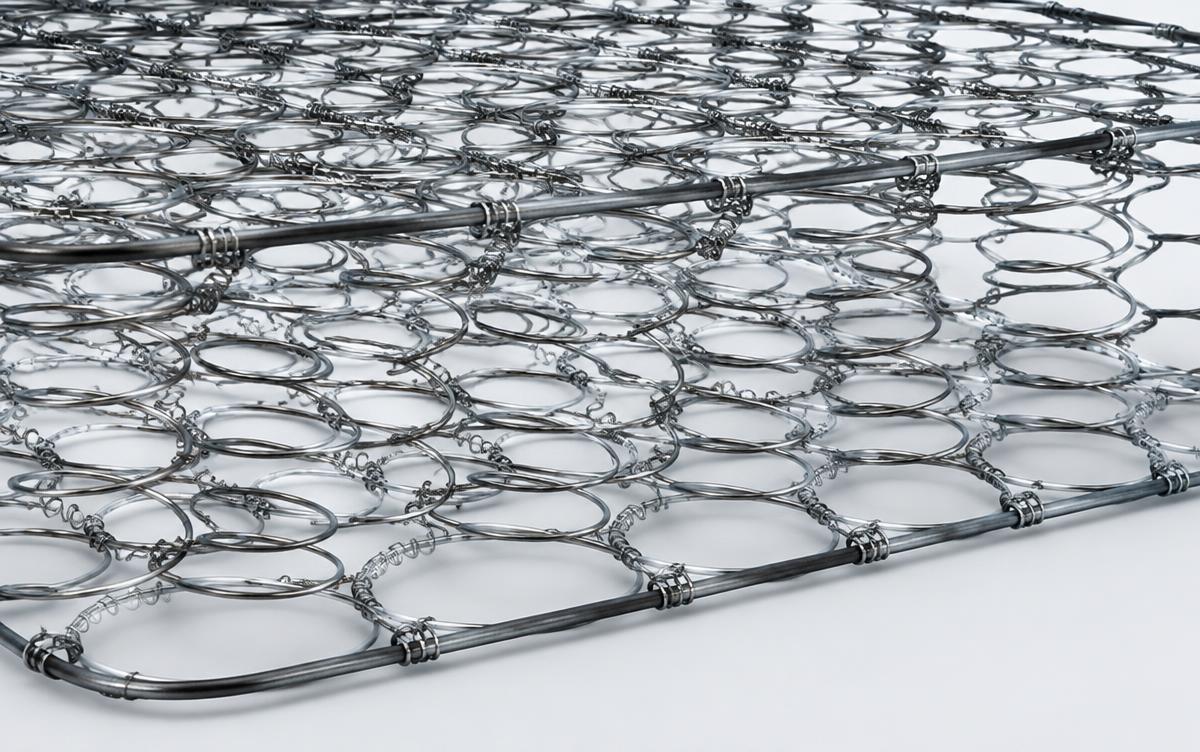
How innerspring mattresses evolved
Traditional spring beds paired interconnected steel coils with padding made from fibers, foam, or other upholstery. Modern designs may still use connected coils, or they may place individual coils in fabric pockets. Covers, padding, and perimeter systems have changed as well. Today, innerspring usually refers to a coil-supported mattress with a comparatively thin comfort system, although retail labels are not standardized.
A hybrid generally adds a more substantial foam or latex comfort system over coils. There is no universal thickness threshold separating the categories, so examine the construction rather than trusting the name. The mattress types guide and innerspring versus hybrid comparison explain why two spring-based beds can feel very different.
Understand the main coil systems
| Coil system | Typical design | Practical question |
|---|---|---|
| Bonnell | Hourglass-shaped coils connected together | Is transferred movement acceptable? |
| Offset | Linked coils with shaped ends that flex at connections | How does the whole surface respond? |
| Continuous wire | Coil rows formed from continuous wire | Does a partner’s movement travel across the bed? |
| Pocketed | Coils individually enclosed in fabric pockets | What cushioning and perimeter design accompany them? |
Pocketed coils can respond more independently than connected systems, but the upholstery and attachment methods also affect motion transfer. A linked coil unit is not automatically poor quality, and a pocketed unit is not automatically comfortable. Try the mattress with your partner if possible, since the movement you notice depends on both sleepers and on the bed frame beneath them.
Coil count, gauge, and zoning
Coil count is meaningful only alongside mattress size, coil type, coil dimensions, and whether the total includes small comfort coils. A high number is not proof of better support. Gauge describes wire thickness; lower gauge numbers generally indicate thicker wire. But coil shape, steel properties, working turns, and layout also affect how a spring responds. Avoid choosing from a single specification.
Zoned systems vary support across the bed, sometimes adding resistance beneath the hips. That may suit some bodies, but zoning must line up reasonably with your height and sleep position. A pronounced firm zone could be uncomfortable when you turn sideways or shift across the mattress. Treat zoning as a feature to test, not as a guarantee of better spinal health.
Bounce, airflow, and edges
Springs recover quickly, which can make rolling over and getting out of bed easier than on deeply contouring foam. Some people enjoy that buoyancy; others find it amplifies partner disturbance. A quiet showroom may also reveal creaking or rubbing, although noise can come from a loose frame rather than the mattress itself. Inspect the entire setup before blaming the spring unit.
Space between coils permits air movement through the support core, but the upper layers still determine much of the temperature experience. Dense padding, a warm quilted cover, and bedding can limit that advantage. For perimeter stability, ask whether the bed uses reinforced coils, a foam encasement, or another design. Test both sitting and lying near the edge because those loads are different.
Who might prefer an innerspring?
- Sleepers who want easy movement and a surface that feels more on top than deeply cradled.
- People who prefer a familiar spring feel and do not need thick contouring layers.
- Shoppers seeking a simpler construction, provided the upholstery and return policy meet their needs.
- Couples comfortable with some bounce after testing movement transfer together.
Side sleepers may need more cushioning than a minimally padded innerspring provides. A pillow-top can add softness, but it does not reveal the quality or durability of the material inside it. Back and stomach sleepers should check that the surface supports their midsection without creating pressure or forcing an uncomfortable posture. See the back-sleeper guide for position-specific checks.
Back pain and the firmness misconception
A spring mattress does not have to be extra firm to support your back. Firmness describes the sensation at the surface; support describes how the construction manages your load. Either a plush or a firm innerspring may fit poorly if cushioning and deeper resistance do not match your body. Use the firmness scale to compare options without assuming the hardest bed is healthiest.
Buying and care checklist
Ask for the thickness and materials of the upholstery above the spring unit, along with foundation requirements and any weight limits. A weak frame or missing center support can undermine a new mattress. Check whether it is one-sided or genuinely flippable; many modern innersprings should only be rotated if instructed. Keep the mattress dry and use a compatible protector rather than relying on the cover to resist spills.
During a trial, track morning comfort, pressure points, movement, and edge stability. Inspect a persistent dip with the bed unloaded, following the manufacturer’s measurement instructions. Warranty coverage and personal comfort returns are different protections. Read the warranty and return policy guide before purchase, especially if removing an old mattress or arranging return transportation will be difficult.
Frequently asked questions
Are more coils always better?
No. Counts are not directly comparable across sizes or coil designs, and some totals include small comfort coils. Judge the complete construction and your experience.
Will an innerspring sleep cooler than foam?
It may allow more airflow through its core, but comfort layers, protectors, bedding, and room conditions still influence warmth.
Can I put an innerspring on an adjustable base?
Only when the manufacturer approves that exact design. Some coil units and borders are not intended to bend repeatedly.
Does a pillow-top make a mattress a hybrid?
Not necessarily. Pillow-top describes a surface construction detail, while hybrid usually describes a substantial foam or latex comfort system over coils.
Ready for the next step?
Explore the mattress buying guide