Hybrid Mattresses: Combining the Best of Both Worlds for Superior Comfort and Support
Hybrid mattresses combine a coil support system with a substantial foam or latex comfort system. That combination can balance cushioning with responsiveness, but the label does not guarantee the best of either material. The right hybrid is the one whose layers fit your body, sleep position, and movement preferences.
By the Sleep Comfort Insights editorial team at Essential Systems · Last reviewed
What counts as a hybrid mattress?
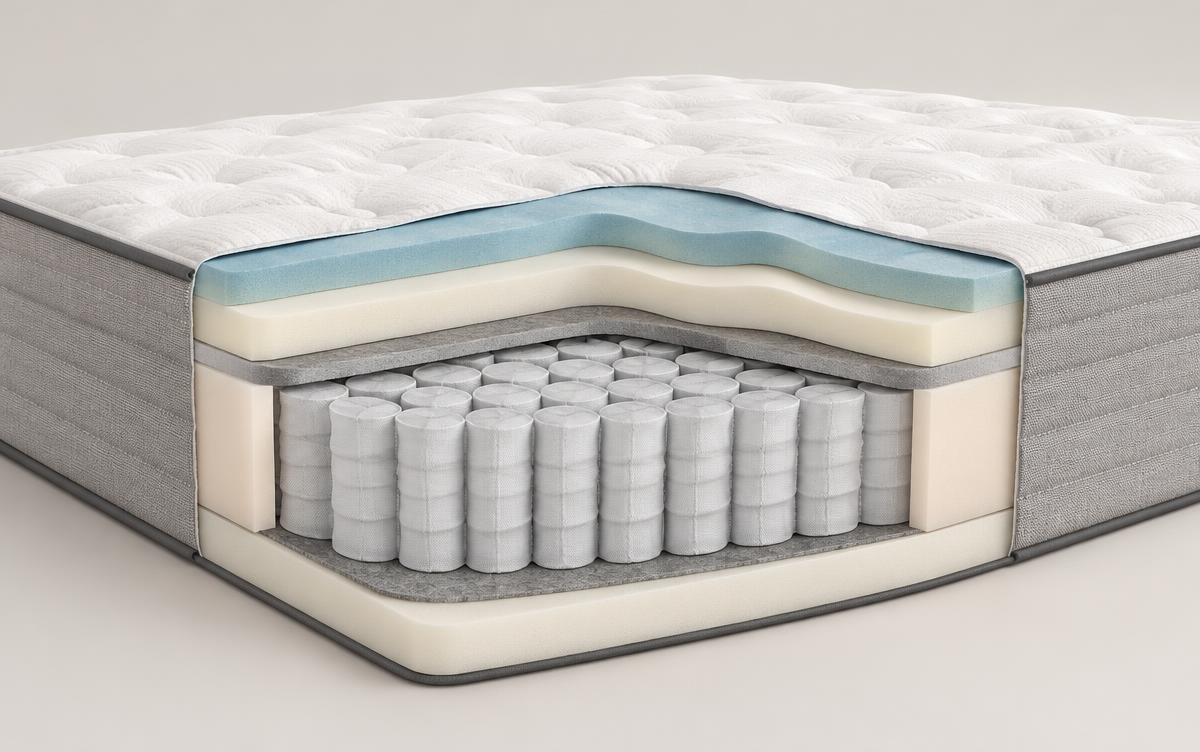
Most hybrids use pocketed coils beneath a comfort stack of memory foam, conventional polyurethane foam, latex, or a mixture. Some add small coils within the comfort system. Retail definitions vary, and there is no single thickness rule that all manufacturers follow. A thin foam pad over a connected spring unit may still be advertised as a hybrid, so ask what the actual layers are.
The cover and quilting affect the first impression, the comfort layers shape pressure relief and ease of movement, and the support system controls deeper compression. These parts interact rather than working independently. A strong coil core cannot fully compensate for overly soft or worn padding. Compare other constructions in understanding mattress types before deciding that a hybrid must be your starting point.
Different comfort layers, different results
| Comfort system | Typical feel | Potential trade-off |
|---|---|---|
| Memory foam over coils | Contouring with underlying spring response | Heat or slow recovery at the surface |
| Latex over coils | Buoyant cushioning and quick recovery | More bounce and less of a slow hug |
| Conventional foam over coils | Often responsive with less pronounced contouring | Quality and resilience vary widely |
| Mixed foams or microcoils | Can fine-tune cushioning and response | More layers can make specifications harder to compare |
Hybrid mattress benefits in daily use
A well-matched hybrid can cushion shoulders and hips while retaining enough response for changing position. Pocketed coils may reduce some movement transfer compared with connected springs, and reinforced edges may increase the comfortable sleeping area. None of those features is automatic. A deep, slow foam layer can still make movement difficult, and an unreinforced perimeter can still compress when you sit on it.
Air can move through the coil cavity, which may help heat dissipate, but the surface remains important. Thick memory foam and insulating bedding can make a hybrid feel warm despite its open core. If overheating is your main concern, review mattress advice for hot sleepers and test with the protector and sheets you expect to use at home.
Choose by sleep position, not the hybrid label
Side sleeping
Side sleepers generally need enough surface give for shoulders and hips while the waist remains comfortably supported. A thick comfort stack may help, but thickness alone does not prove pressure relief. A lightweight side sleeper may barely compress a firm latex hybrid, while a heavier sleeper may sink through a very soft foam layer. Use the side-sleeper guide to plan a position-specific test.
Back, stomach, and changing positions
Back sleepers often prefer a balance of moderate contouring and resistance beneath the pelvis. Stomach sleepers may need shallower cushioning and firmer overall support to limit midsection sink. Combination sleepers should roll between their usual positions rather than choosing based only on the position in which they fall asleep. Surface response matters as much as the amount of spring in the core.
Can a hybrid help with back pain?
A comfortable hybrid may reduce mattress-related discomfort, but there is no evidence-based rule that coils plus foam treat back pain better than every other construction. Firmness, cushioning, and body fit matter more than a category name. Zoned coils can add resistance under selected areas, but their benefit depends on your height, proportions, and position. A zone that misses its intended area may be unhelpful.
For a structured starting point, compare the construction profiles in hybrid mattresses for back pain. Then use the firmness scale to choose a sensible test range. Do not interpret a supportive showroom feel or a spinal-health marketing claim as a clinical guarantee, and avoid buying a replacement solely because a product is described as orthopedic.
Specifications worth requesting
- A full layer list with material types and thicknesses, including quilting and transition layers.
- Foam density where available, understood separately from foam firmness.
- Coil type, perimeter construction, and any zoning, rather than just an impressive total coil count.
- Maximum supported load, approved base types, and adjustable-base compatibility in writing.
- Delivery weight, compressed or flat shipping details, return fees, and trial conditions.
Coil gauge and count are not universal scores. Counts change with mattress size and may include tiny comfort coils; gauge is only one part of spring behavior. Likewise, greater height can mean more cushioning rather than stronger support. If specifications are limited, acknowledge that uncertainty and place greater weight on a clear, usable trial policy instead of filling gaps with assumptions.
Testing, maintenance, and practical costs
Test the middle and perimeter, then ask a partner to move while you remain still. Practice getting up if mobility is a concern. During a home trial, record pressure, morning comfort, heat, and ease of turning over several nights rather than chasing the softest first impression. Do not continue an adjustment period if symptoms are severe or worsening; seek appropriate medical guidance instead.
Hybrids can be heavy, and thick models may need deeper fitted sheets. Check stair access and delivery assistance before buying. Rotate only as instructed and never flip a one-sided design. Follow the required foundation specifications so the coil system receives even support. Our innerspring versus hybrid comparison helps decide whether a simpler spring mattress would meet the same needs with fewer layers.
Frequently asked questions
Are all hybrids medium-firm?
No. Hybrids can feel plush, medium, or firm depending on the comfort materials, support design, and sleeper. The category does not establish a firmness rating.
Do hybrids stop partner movement?
Some isolate movement well, particularly with cushioning over pocketed coils, but bounce and transfer vary. Test the actual mattress together when possible.
Is a thicker hybrid better?
Not necessarily. Height can reflect thicker padding rather than better support or durability. Layer quality, body fit, and foundation compatibility matter more.
Can a hybrid be used without a box spring?
Often yes, on an approved platform or foundation. Follow the manufacturer’s written requirements for slat spacing, center support, and any other restrictions.
Ready for the next step?
Explore the mattress buying guide