Best Memory Foam Mattresses: Profiles for Pressure Relief and Comfort
The best memory foam mattress is one with a supportive base, a comfort layer matched to your weight and sleeping position, and a design that manages heat. Here are the main profiles, who each suits and what to check on the spec sheet.
By the Sleep Comfort Insights editorial team at Essential Systems · Last reviewed
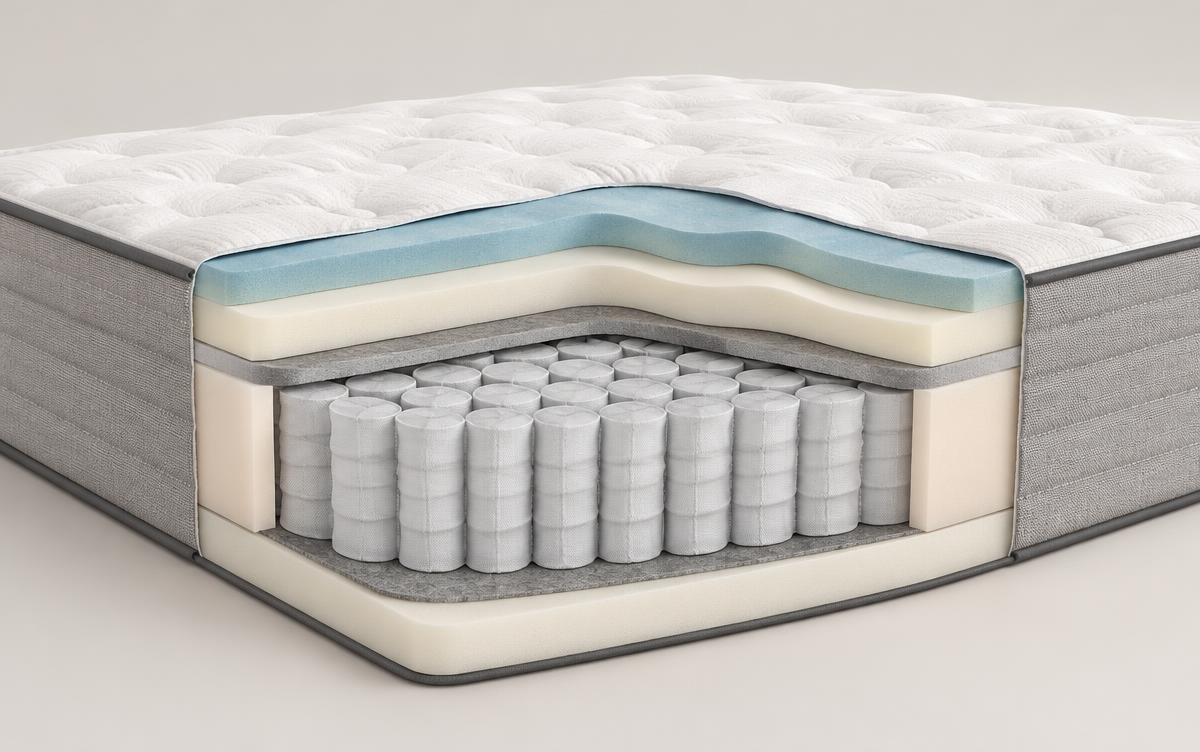
Why people choose memory foam
Memory foam softens with heat and pressure and contours around the body, which spreads weight and can reduce pressure at the shoulders and hips. It also absorbs motion well, so it is popular with couples. The trade-offs are heat retention in some designs and a slow response when you change position. For a general overview, read our memory foam mattress guide.
Memory foam profiles compared
| Profile | Suits | Pros | Cons |
|---|---|---|---|
| Medium-firm foam with dense support core | Back and combination sleepers | Balanced support, contouring | May sleep warm |
| Medium-soft foam | Side sleepers, lighter sleepers | Deep pressure relief | Too soft for heavy or stomach sleepers |
| Cooling-designed foam (open-cell, gel or phase-change claims) | Hot sleepers who like foam | Better heat management claims | Claims vary; benefit often modest |
| Firm foam | Stomach sleepers, those who dislike sinking | Less sink, stable support | Limited cushioning |
| Foam-over-coil hybrid | Those wanting foam feel with more bounce | Airflow and edge support | Pricier |
Profile details
Best overall profile: medium-firm foam with a dense base
- Who it suits: back sleepers and many combination sleepers; also fits couples with different sleep positions.
- Pros: contouring without feeling swallowed, quiet.
- Cons: heat; edge support is often weaker than on coil beds.
- Spec check: total thickness, comfort layer thickness, foam density, and a base layer that is clearly firmer than the top.
Best for side sleepers: medium-soft foam
A slightly softer feel lets shoulders and hips sink in. See best mattresses for side sleepers for further profiles.
Best for hot sleepers: foam with airflow features
Look for open-cell structures, breathable covers and perhaps a hybrid build. Our guide for hot sleepers explains what actually helps and what is marketing.
Spec-sheet terms worth understanding
- Density: how much a cubic foot of foam weighs; higher density generally resists sagging longer but may feel warmer.
- Indentation load deflection (ILD or IFD): a measure of firmness. See the mattress glossary.
- Certifications: independent emissions or content certifications can help if you are sensitive to odors.
- Off-gassing: new foam may smell for a few days; airing the room helps.
Memory foam vs. other materials
If you want a more springy surface and cooler sleep, compare it with latex in memory foam vs. latex. If you want a balance, see hybrid mattresses. For back pain specifically, our best mattress for back pain page puts the options side by side.
Is memory foam good for back pain?
It can be, if it is medium-firm with a supportive base. Very soft foam can let the hips sink out of line.
Does memory foam sleep hot?
Many designs hold more heat than coil or latex beds. Open-cell foam, breathable covers and hybrid builds can help.
How long does memory foam last?
It varies with density and use. Visible impressions and loss of support are signs to replace; see when to replace your mattress.
What if it smells when new?
A mild odor is common and usually fades after airing out. Contact the seller if it persists or bothers you.