Adjustable Beds for Back Pain: Unlocking Relief and Enhanced Sleep
An adjustable bed for back pain may make resting more comfortable by raising the torso, knees, or both. It changes your position, not the underlying condition or the quality of a worn mattress. Start with small adjustments and prioritize safe entry, exit, and compatibility.
By the Sleep Comfort Insights editorial team at Essential Systems · Last reviewed
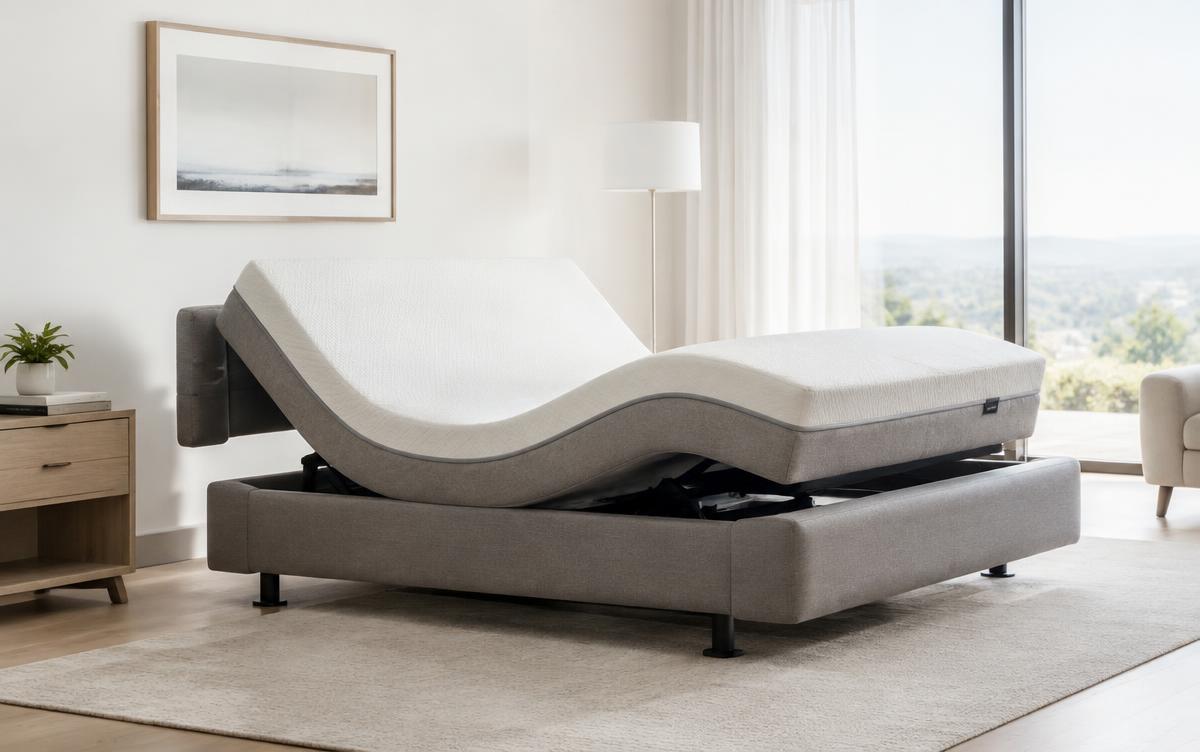
What an adjustable bed changes
An adjustable base bends at specific sections to lift the upper body or legs. Many people use these positions for reading, resting, or finding a less uncomfortable sleep posture. Slight knee elevation may reduce the feeling of tension in the lower back, while modest torso elevation can help some people get comfortable. Effects are individual, and a position that helps one person may worsen another's symptoms. There is no single angle that reliably relieves every type of back pain.
The base is separate from the mattress. It cannot restore collapsed foam, remove a body impression, or make an incompatible mattress flex safely. Advertised zero-gravity settings are presets, not standardized medical treatments. Similarly, massage features are generally vibration functions rather than clinical massage therapy. The complete back-pain guide can help you decide whether your main problem is the sleep surface, position, or something requiring medical assessment.
Try gentle positioning before chasing presets
Start flat, then raise the head or knees in small increments while you are awake. Notice whether the change feels comfortable after several minutes, whether your hips slide toward the foot, and whether the mattress folds unpleasantly. A back sleeper may prefer a slight knee bend with modest head elevation. A side sleeper may find a small head lift acceptable but a large knee bend awkward. Stomach sleeping generally fits poorly with pronounced bending of the base.
Do not keep increasing elevation because a larger change seems more therapeutic. A highly raised torso may create pressure at the lower back or make side sleeping difficult. If you need a particular position because of a diagnosed condition, ask your clinician how to achieve it safely. Adjustable beds do not cure sleep apnea and should not replace prescribed treatment. Sudden breathlessness or new leg swelling needs medical attention rather than experimentation with bed angles.
| Feature | Why it may matter | What to verify |
|---|---|---|
| Independent head and foot lift | Allows smaller positioning changes | Controls are simple and movements feel smooth |
| Emergency lowering | Helps during power loss | How it works and whether batteries are required |
| Split controls | Partners can use different positions | Mattress and sheet arrangements are compatible |
| Wall-hugging motion | May preserve access to a nightstand | Actual reach in the raised position |
| Adjustable leg height | Affects entry and exit | Total height with your mattress installed |
Confirm mattress and frame compatibility
Many foam, latex, and flexible pocketed-coil mattresses can work on an adjustable base, but compatibility must be confirmed for the exact mattress. Some traditional spring systems, rigid perimeter designs, and unusually thick constructions may not bend appropriately. Check the written warranty rather than relying on a broad statement about a material category. Ask whether retainer bars, a particular mattress thickness, or restrictions on elevated positions apply. A compatible mattress should stay secure without bunching or bridging excessively.
If placing the base inside a decorative bed frame, measure the internal opening, support arrangement, and clearance for moving parts. Platform compatibility and zero-clearance operation vary. Drawers, rails, headboards, and footboards can interfere even when nominal sizes match. For a split king, two twin XL mattresses normally make a 76-by-80-inch surface; partners need compatible bases and bedding. Our size guide explains the difference between split king and California king before you order.
Load limits and everyday safety
Check how the manufacturer defines the load limit: it may include mattress weight, sleepers, and bedding, and may apply to each side separately. A motor's lifting capacity is not necessarily the same as the base's static capacity. Follow instructions about sitting near raised sections and keep children and pets away from hinges and under-bed mechanisms. Cords should be routed away from moving parts, pinch points, and walking paths. Avoid modifying the base or adding improvised supports.
Consider how you will get out of bed if the base stops while elevated. People with limited mobility may need help selecting a safe bed height, transfer arrangement, and control system. Home adjustable beds are not automatically equivalent to hospital beds. Adding aftermarket rails can create entrapment hazards; do not assume an accessory is safe because it fits. Ask an occupational therapist or other appropriate clinician about transfer or fall concerns instead of solving them solely with retailer accessories.
Separate useful functions from expensive extras
- Prioritize reliable head and knee adjustment, a control you can operate easily, suitable load capacity, and safe overall bed height.
- Check whether the remote has clear buttons, a lockout feature if needed, and an easy return-to-flat command.
- Test whether under-bed lighting improves visibility without exposing cables or creating a trip hazard.
- Treat app controls, vibration, and saved presets as conveniences, not evidence of better pain outcomes.
- Confirm access for delivery and service, including stairs, doorway turns, and how a heavy base will eventually be removed.
Understand costs, service, and returns
A mattress trial may not include the adjustable base. Bases may be final sale or have different return charges, so read both policies before purchasing a bundle. Ask who handles installation, whether old-bed removal is included, and what happens if the motor fails. Warranty coverage can differ for the frame, electrical parts, and labor. The warranty guide explains why coverage length alone does not describe the practical value of protection.
Keep the serial number, instructions, and purchase documents accessible. Test emergency lowering as directed before you depend on the base every night. Reassess comfort after changing the mattress because a different thickness or firmness can alter how the elevated position feels. If mild positioning does not help, do not assume another preset will solve the problem. A persistent pattern of pain deserves clinical evaluation, and a supportive flat bed may still be the better choice for your circumstances.
Frequently asked questions
Does zero gravity treat back pain?
It is a marketing name for a reclined position, not a proven treatment for every cause of pain. Some people find it comfortable; others prefer much smaller adjustments.
Can an adjustable bed improve circulation?
Leg elevation can affect swelling in some circumstances, but it is not suitable for every condition. Ask a clinician about unexplained swelling, vascular disease, or prescribed positioning.
Can I use my existing mattress?
Only if its manufacturer confirms adjustable-base compatibility and it remains in good condition. Check the exact model's requirements, not just the mattress material.
Is a split king necessary for couples?
No. It is useful when partners want independent positions, but it adds a center seam and separate bedding considerations. A shared adjustable surface may be enough if your preferences match.
Ready for the next step?
Explore the mattress buying guide